DOT Mandates 100% Automatic Refund for Delayed Flights

Anúncios
The U.S. Department of Transportation has issued a milestone policy requiring airlines to automatically issue full cash refunds for significantly delayed or canceled flights.
By shifting the burden of action from passengers to carriers, this mandate eliminates complex administrative claims, ensuring prompt financial reimbursement and establishing clear consumer rights across the aviation industry.
Anúncios
Understanding the New Refund Mandate Details
The Department of Transportation’s new rule specifies that passengers are entitled to a 100% automatic refund when their domestic flight is delayed by three hours or more, or an international flight by six hours or more.
This applies when the delay is within the airline’s control, such as mechanical issues or staffing shortages, and the passenger chooses not to take alternative transportation offered.
For delays not within the airline’s control, like severe weather or air traffic control issues, the airline is still obligated to provide a refund if the passenger cancels their trip due to the delay.
However, the ‘automatic’ aspect primarily applies to airline-controlled delays, streamlining the process significantly. This distinction is crucial for both consumers and carriers to understand.
Anúncios
This comprehensive mandate also extends to instances where flight changes significantly alter the travel itinerary, such as a change in departure or arrival airport, or a substantial increase in the number of connections.
Passengers will have the right to a full refund if these changes are unacceptable, ensuring flexibility and protection against unforeseen alterations.
What Qualifies for an Automatic Refund?
- Domestic flights delayed by three hours or more.
- International flights delayed by six hours or more.
- Significant changes to itinerary (e.g., airport change, increased connections).
- Airline-controlled delays where alternative travel is declined.
The Department of Transportation Announces 100% Automatic Refund Mandate for Delayed Airline Flights clearly defines ‘significant delay,’ eliminating previous ambiguities that often led to passenger frustration.
This standardization across the industry is a welcome change for frequent flyers and occasional travelers alike, providing a consistent framework for compensation.
Impact on Airlines and Operational Adjustments
Airlines are now facing a period of significant operational and financial adjustment as they implement the Department of Transportation Announces 100% Automatic Refund Mandate for Delayed Airline Flights.
This new rule necessitates substantial changes to their refund processing systems, customer service protocols, and potentially, their scheduling and operational resilience strategies.
The financial implications could be considerable, especially for carriers with a history of frequent delays.
Industry experts predict that airlines will invest heavily in upgrading their IT infrastructure to automate refund processes and ensure compliance with the mandate.
This will involve integrating new software solutions that can accurately track delay durations, attribute causes, and initiate refunds without manual intervention.
The goal is to make the process as seamless as possible for both the airline and the passenger.
Furthermore, this mandate could incentivize airlines to improve their on-time performance and operational efficiency to avoid incurring significant refund costs.
Enhanced maintenance schedules, better crew management, and more robust contingency plans for disruptions may become standard practice.
The Department of Transportation’s move could ultimately lead to a more reliable air travel system overall.
New Compliance Requirements for Carriers
- Automated refund processing systems.
- Clear communication protocols for eligible delays.
- Enhanced internal tracking of delay causes.
- Improved operational efficiency to minimize delays.
The Department of Transportation Announces 100% Automatic Refund Mandate for Delayed Airline Flights will undoubtedly lead to a re-evaluation of business practices within the airline industry.
Carriers will need to balance profitability with adherence to these new consumer protection standards, potentially leading to innovative solutions for managing disruptions.
Passenger Rights and How to Claim Your Refund
With the Department of Transportation Announces 100% Automatic Refund Mandate for Delayed Airline Flights, passengers now have a clear and powerful tool to protect their travel investments.
Understanding your rights under this new rule is paramount to ensuring you receive the compensation you’re entitled to.
The key takeaway is that for qualifying delays, the refund process should be automatic, reducing the need for passengers to actively pursue their claims.
However, it’s still advisable for passengers to keep thorough records of their travel plans, including booking confirmations, flight numbers, and any communication with the airline regarding delays or cancellations.
While the refund is automatic for airline-controlled delays, having documentation can be helpful in the rare event of a dispute or processing error. This proactive approach ensures you have all necessary information at hand.
If a refund isn’t processed automatically within the stipulated timeframe (typically within seven business days for credit card purchases and 20 days for other payment methods), passengers should first contact the airline’s customer service.
If the issue remains unresolved, the Department of Transportation provides avenues for filing a consumer complaint, which can escalate the matter for official review and enforcement.
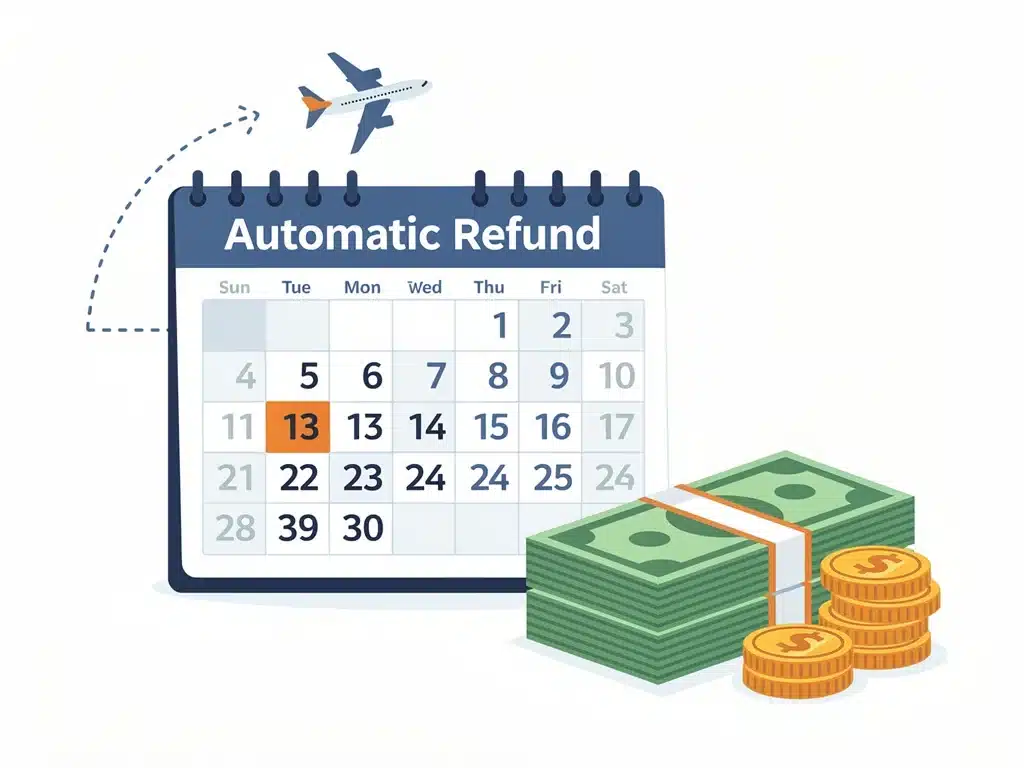
The Department of Transportation Announces 100% Automatic Refund Mandate for Delayed Airline Flights empowers travelers with unprecedented rights.
This level of protection ensures that economic inconvenience due to airline failures is minimized, shifting accountability directly to the carriers.
Historical Context and Consumer Advocacy
The implementation of the Department of Transportation Announces 100% Automatic Refund Mandate for Delayed Airline Flights is not an isolated event but the culmination of years of persistent consumer advocacy.
Various organizations and individual travelers have long highlighted the difficulties in obtaining refunds for disrupted flights, often citing opaque policies and cumbersome claim processes as major barriers.
This new rule addresses many of those long-standing grievances.
Prior to this mandate, refund policies varied significantly among airlines, often leaving passengers confused about their eligibility and the steps required to secure their money back.
The lack of a universal standard created an uneven playing field, where some airlines were more responsive than others, and many passengers simply gave up on pursuing refunds due to the perceived complexity and effort involved.
This fragmented approach contributed to widespread frustration.
The COVID-19 pandemic further exacerbated these issues, as mass flight cancellations and delays led to an unprecedented volume of refund requests.
Many airlines struggled to cope, and some were criticized for delaying or denying refunds, offering vouchers instead.
These experiences underscored the urgent need for clearer, more enforceable regulations, directly leading to the Department of Transportation Announces 100% Automatic Refund Mandate for Delayed Airline Flights.
Milestones in Passenger Protection
- Early 2000s: Initial calls for clearer refund policies.
- 2010s: Increased pressure from consumer groups on DOT for stricter rules.
- 2020-2022: Pandemic highlights systemic refund issues, intensifying advocacy.
- 22024: Department of Transportation announces automatic refund mandate.
This historical context demonstrates that the Department of Transportation Announces 100% Automatic Refund Mandate for Delayed Airline Flights is a direct response to a long-standing consumer need, rather than a sudden policy shift.
It reflects a growing commitment to passenger welfare.
Economic Implications for the Travel Industry
The Department of Transportation Announces 100% Automatic Refund Mandate for Delayed Airline Flights carries significant economic implications for the entire travel industry, extending beyond just airlines.
While carriers will bear the direct financial burden of increased refunds, the policy could also influence consumer behavior, travel insurance markets, and even airport operations.
The ripple effects are expected to be felt across the ecosystem.
For airlines, the immediate impact will be on their cash flow and profitability, especially during periods of high disruption.
This could lead to adjustments in ticket pricing, a greater emphasis on ancillary services, or even a re-evaluation of flight routes and schedules to minimize exposure to delays.
The mandate might also accelerate the adoption of predictive analytics and AI to anticipate and mitigate potential disruptions more effectively.
Conversely, travel insurance providers may see a shift in demand for certain types of coverage.
With automatic refunds for significant delays, some aspects of trip interruption insurance might become less critical, while other coverages, such as medical emergencies or lost luggage, could remain highly relevant.
This could prompt insurance companies to innovate their product offerings to align with the new regulatory landscape.
The Department of Transportation Announces 100% Automatic Refund Mandate for Delayed Airline Flights could also indirectly benefit other sectors of the travel industry.
A more reliable and consumer-friendly air travel experience might encourage more people to fly, boosting demand for hotels, rental cars, and destination activities.
This positive feedback loop could partially offset the direct costs incurred by airlines.
Future Outlook and Potential Enhancements
The Department of Transportation Announces 100% Automatic Refund Mandate for Delayed Airline Flights is a significant step, but it also opens the door for future enhancements and refinements in passenger protection.
As the industry adapts to this new regulation, there will likely be ongoing discussions about expanding its scope, refining its definitions, and ensuring its effective enforcement. This mandate serves as a foundation for continuous improvement.
One area for potential future development could be the inclusion of compensation for consequential damages beyond the ticket price, such as lost wages or missed connections on separate bookings.
While currently focused on the fare itself, a more holistic approach to passenger inconvenience could be explored, depending on the success and impact of the current mandate. This would represent an even greater level of consumer protection.
There is also the possibility of harmonizing these refund rules with international standards, particularly for flights involving multiple countries.
While the Department of Transportation’s mandate applies to flights to and from the U.S., aligning with global regulations could simplify the process for international travelers and airlines operating across borders.
This would create a more consistent and predictable environment for all.
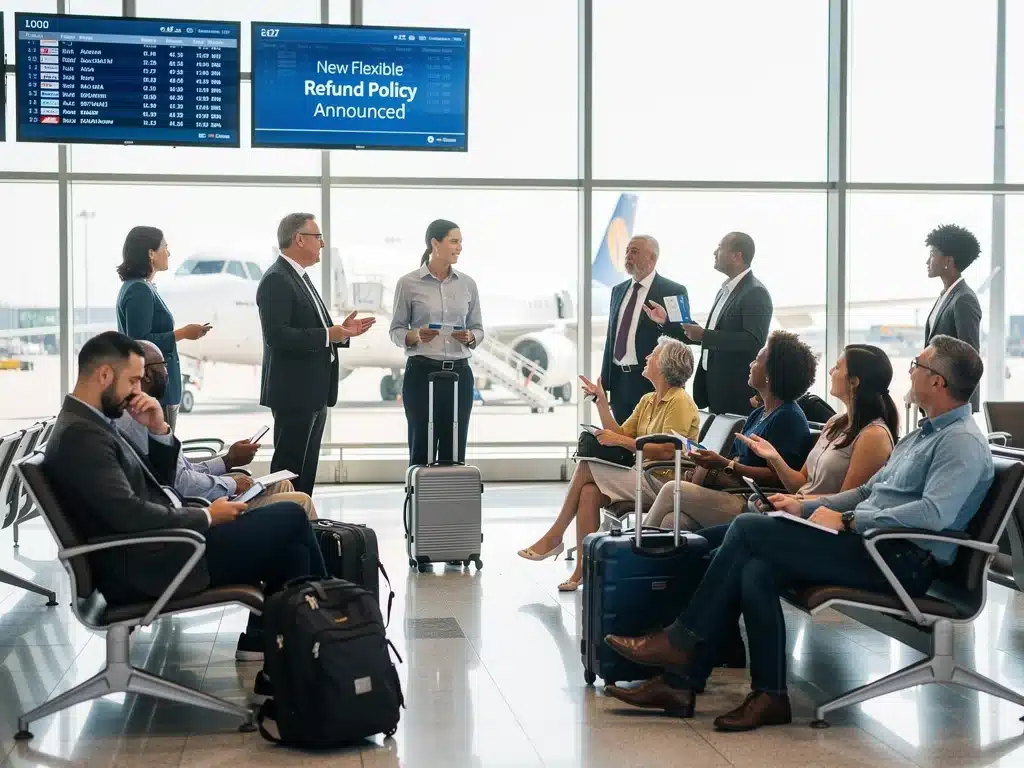
The Department of Transportation Announces 100% Automatic Refund Mandate for Delayed Airline Flights is not the final word in passenger rights but rather a dynamic and evolving framework.
Its success will pave the way for a more robust and responsive system for air travelers worldwide, setting a new benchmark for accountability.
Consumer Confidence and Industry Accountability
The Department of Transportation Announces 100% Automatic Refund Mandate for Delayed Airline Flights is expected to significantly boost consumer confidence in air travel.
Knowing that financial recourse is automatically guaranteed for significant delays can alleviate a major source of stress and uncertainty for passengers.
This newfound assurance could encourage more people to book flights, knowing their investment is protected.
For the airline industry, this mandate fosters a culture of greater accountability. Airlines are now directly incentivized to minimize delays and disruptions, as each qualifying incident will have a clear and immediate financial consequence.
This shifts the focus from managing complaints after the fact to preventing issues before they occur, leading to a more efficient and passenger-centric operation.
The transparency introduced by the Department of Transportation Announces 100% Automatic Refund Mandate for Delayed Airline Flights will also allow for better public scrutiny of airline performance.
Data on refunds issued due to delays could become a key metric for evaluating carriers, influencing consumer choices and fostering healthy competition based on reliability and customer service.
This market-driven accountability complements regulatory oversight.
Ultimately, the Department of Transportation Announces 100% Automatic Refund Mandate for Delayed Airline Flights serves as a powerful signal that passenger rights are a top priority.
It reinforces the idea that air travel should be a reliable and predictable experience, with clear protections in place when unforeseen circumstances arise, building trust between travelers and airlines.
Navigating the New Landscape for Travelers
For travelers, the new landscape created by the Department of Transportation Announces 100% Automatic Refund Mandate for Delayed Airline Flights means a simpler, more secure journey.
The primary action for passengers is to simply be aware of their rights and the conditions under which an automatic refund is due.
This knowledge empowers them to travel with greater peace of mind, knowing that their financial interests are protected.
While the refund process is designed to be automatic, staying informed about the specifics of your flight and any potential delays remains a good practice.
Airlines are required to communicate delay information promptly, and passengers should monitor these updates.
This proactive approach ensures that you are aware if your flight qualifies for the new refund provisions.
In cases where a delay might be borderline or if you choose to cancel due to an airline-controlled delay that doesn’t immediately trigger an automatic refund, understanding the process for filing a claim directly with the airline is still valuable.
The Department of Transportation’s website also provides resources and guidance for consumers seeking clarification or needing to file a complaint. This ensures multiple avenues for resolution.
The Department of Transportation Announces 100% Automatic Refund Mandate for Delayed Airline Flights simplifies the post-disruption experience for passengers.
It significantly reduces the administrative burden, allowing travelers to focus on their journey rather than engaging in lengthy battles for their rightful refunds, making air travel more accessible and less stressful.
| Key Point | Brief Description |
|---|---|
| Automatic Refunds | Passengers receive 100% refund for qualifying airline-controlled delays. |
| Delay Thresholds | 3+ hours for domestic, 6+ hours for international flights. |
| Airline Accountability | Carriers must update systems and improve operational efficiency. |
| Enhanced Rights | Clearer, stronger protections for all air travelers in the U.S. |
Frequently Asked Questions
The mandate covers 100% automatic refunds for domestic flights delayed by three hours or more, and international flights delayed by six hours or more, specifically when the delay is within the airline’s control and the passenger declines alternative transportation. It also applies to significant itinerary changes deemed unacceptable by the passenger.
Airlines are required to process refunds within seven business days for credit card purchases and within 20 days for other payment methods. This timeline ensures prompt compensation for eligible passengers, minimizing financial inconvenience after a disruptive flight experience.
For delays outside the airline’s control, such as severe weather or air traffic control issues, the automatic refund provision may not apply. However, if you choose to cancel your trip due to such a delay, the airline is still obligated to provide a refund, though it might not be automatic.
For airline-controlled delays meeting the specified thresholds, the refund should be automatic. While you generally don’t need to initiate the process, it’s always wise to keep records of your booking and communication. If a refund doesn’t appear within the stipulated timeframe, contact the airline first, then the DOT.
The economic implications for airlines are significant, potentially leading to adjustments in ticket pricing to offset increased refund costs. However, it could also drive airlines to improve operational efficiency, which might stabilize or even reduce some costs in the long run through fewer disruptions and better service.
Impact and Implications
The Department of Transportation Announces 100% Automatic Refund Mandate for Delayed Airline Flights fundamentally reshapes passenger rights and airline responsibilities across the aviation sector.
This new era of consumer protection ensures travelers gain financial security and transparent recourse when facing unexpected flight disruptions, as reinforced by the Biden-Harris Administration’s final rule requiring automatic refunds for airline passengers.
Moving forward, airlines face heightened pressure to optimize scheduling integrity and operational reliability, driving systemic upgrades across the industry and establishing a precedent for future passenger rights expansions.