EV Fast-Charging Standards: 15-Minute Mandate Explained
Anúncios
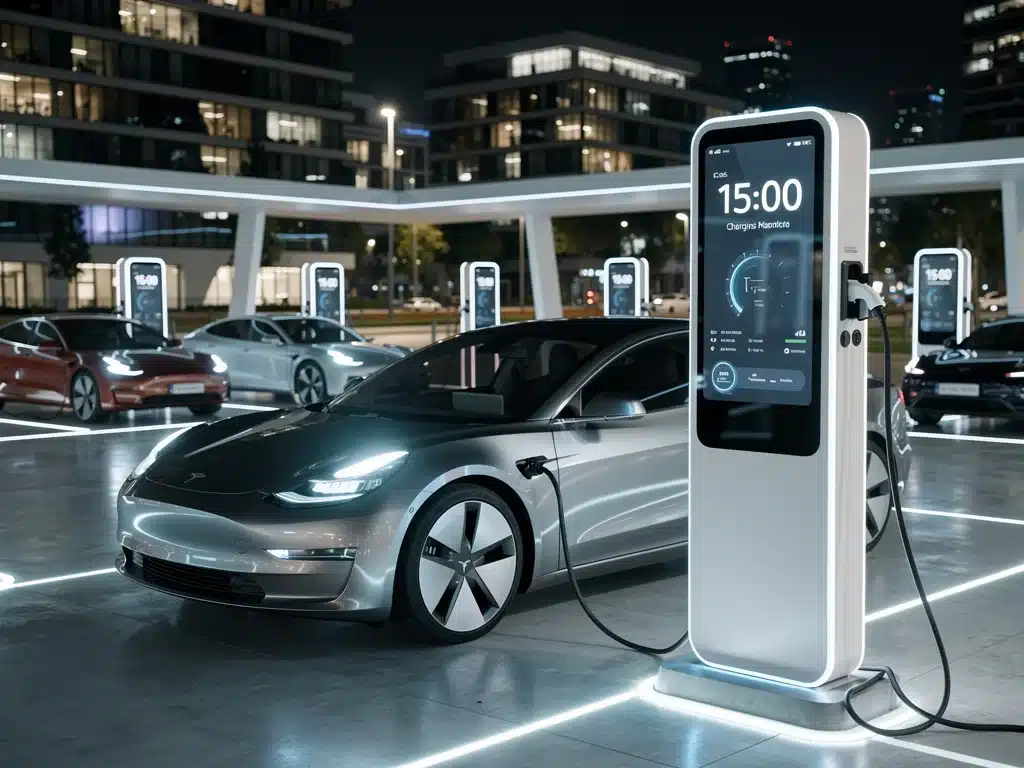
New national fast-charging standards are now in effect, introducing a critical 15-minute mandate for EV charging. This development significantly impacts electric vehicle owners across the United States. Understanding these changes is crucial for future charging experiences and infrastructure growth.
The **New National Fast-Charging Standards Take Effect: What EV Owners Need to Know About the 15-Minute Mandate** is shaping today’s agenda with new details released by officials and industry sources. This update prioritizes what changed, why it matters and what to watch next, in a straightforward news format.
Anúncios
New National Fast-Charging Standards Take Effect: Understanding the 15-Minute Mandate
The federal government has officially implemented new national fast-charging standards for electric vehicles, a move poised to reshape the EV landscape across the United States. Central to these regulations is a groundbreaking 15-minute mandate, requiring new federally funded fast-charging stations to deliver a significant charge within this timeframe.
This initiative aims to alleviate range anxiety and accelerate EV adoption by ensuring a more consistent and rapid charging experience for drivers. The mandate reflects a concerted effort to standardize charging infrastructure, making it more reliable and user-friendly nationwide.
EV owners are now navigating a new era of charging, where speed and accessibility are paramount. The implications of these standards extend beyond just charging times, influencing everything from station development to vehicle compatibility and long-term infrastructure planning.
Anúncios
The Core of the 15-Minute Mandate: What It Means for EV Drivers
At its heart, the 15-minute mandate dictates that federally funded direct current (DC) fast chargers must be capable of adding at least 150 miles of range to a typical EV in approximately 15 minutes. This performance benchmark is a significant step towards mirroring the convenience of gasoline refueling.
The mandate applies specifically to new charging stations built with federal funds, ensuring a baseline level of service quality across the expanding national network. This focus on speed is expected to dramatically improve the user experience for long-distance travel and daily commutes alike.
For EV owners, this means less waiting time and greater confidence in finding reliable, high-speed charging options, particularly along major travel corridors. It represents a tangible improvement in the practicality of electric vehicle ownership.
Technical Specifications and Power Output Requirements
To meet the 15-minute mandate, charging stations will typically need to deliver power outputs of 350 kW or higher. This high power delivery ensures that vehicles capable of accepting such rates can replenish their batteries swiftly.
The standards also address charger reliability, uptime, and interoperability, aiming for a seamless charging experience regardless of the EV make or model. These technical requirements are designed to future-proof the charging network as EV technology continues to evolve.
- Minimum power output for compliance: 350 kW
- Target range addition in 15 minutes: 150 miles
- Mandatory uptime requirement: 97%
These technical specifications are crucial for manufacturers and charging network operators, guiding the development and deployment of next-generation charging infrastructure that aligns with federal goals.
Impact on Existing EV Charging Infrastructure and Future Development
The new standards will have a profound impact on both existing and future EV charging infrastructure. While the mandate primarily targets new federally funded stations, it sets a precedent for the entire industry, encouraging upgrades and expansions.
Many older fast-charging stations may not meet the 15-minute mandate’s power output requirements, potentially leading to a two-tiered system of charging speeds. However, the federal push is expected to incentivize private sector investment in higher-powered chargers.
Future development will heavily focus on deploying ultra-fast chargers capable of meeting or exceeding these new benchmarks. This will accelerate the build-out of a robust national charging network, making EV travel more viable across the country.
Standardization of Charging Connectors: CCS and NACS
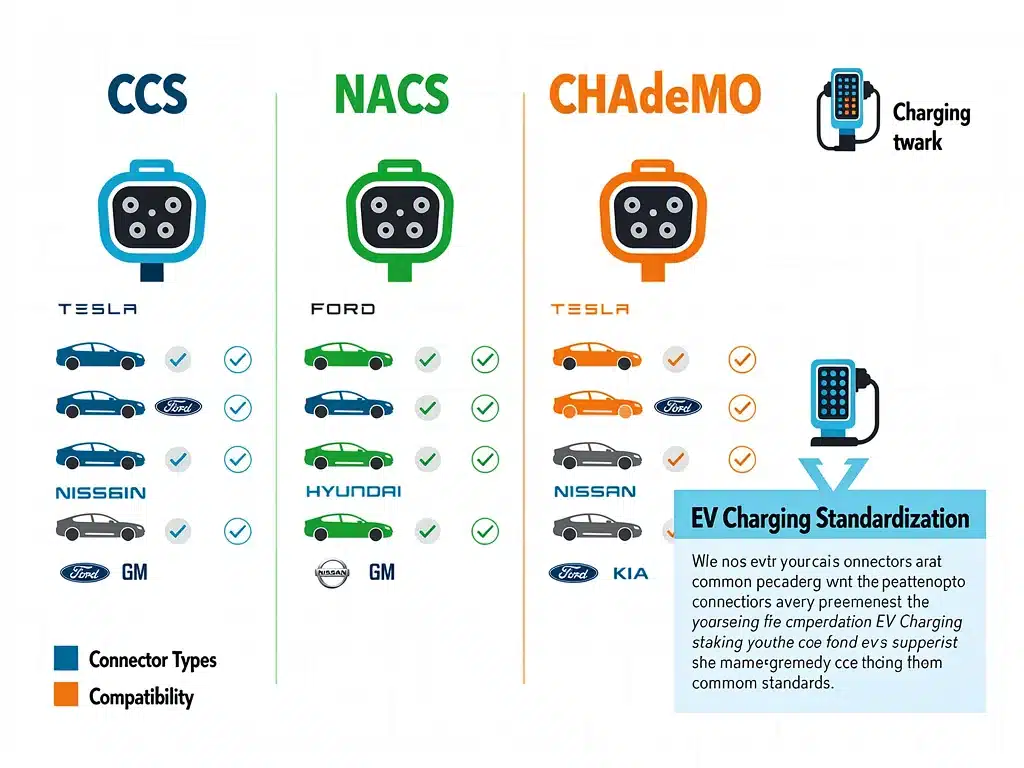
A key aspect of the new national fast-charging standards is the push for connector standardization. The Combined Charging System (CCS) has been the dominant standard for federally funded projects, but the recent embrace of the North American Charging Standard (NACS) by major automakers is changing the landscape.
The federal government has indicated that NACS connectors can be included in federally funded charging stations, provided they also include at least one CCS connector or offer an adapter. This dual-connector approach aims to ensure broad compatibility for all EV drivers.
This evolution in connector standards is critical for reducing confusion and ensuring that all EV owners can access the expanding fast-charging network. The goal is a truly universal charging experience across different vehicle brands.
- CCS remains a primary federal standard
- NACS integration is now permitted with CCS inclusion or adapters
- Focus on ensuring broad EV compatibility
The harmonization of charging connectors is a significant step towards a more cohesive and user-friendly EV ecosystem, benefiting all participants in the market.
Federal Funding and Incentives Driving the Change
The implementation of these new standards is bolstered by substantial federal funding allocated through initiatives like the Bipartisan Infrastructure Law. Billions of dollars are being channeled into building out a national EV charging network, with a strong emphasis on reliability and speed.
These funds are contingent on adherence to the new technical specifications, including the 15-minute mandate and connector standardization. This strategic use of federal dollars ensures that new infrastructure projects align with the government’s vision for a robust and accessible EV charging ecosystem.
States and private entities are leveraging these incentives to accelerate their own charging infrastructure plans, creating a synergistic effort to expand fast-charging options nationwide. The financial backing is a powerful catalyst for rapid change.
State-Level Adoption and Implementation Challenges
While the federal government sets the overarching standards, states play a crucial role in implementing and deploying the charging infrastructure. Each state faces unique challenges, including permitting, grid capacity, and local regulations.
Many states are actively developing their own EV infrastructure plans, integrating the federal 15-minute mandate into their strategies. Coordination between federal, state, and local authorities is essential for seamless deployment and avoiding bottlenecks.
- Permitting and zoning variations across states
- Grid upgrades required to support high-power charging
- Local community engagement and site selection
Overcoming these challenges will be key to successfully rolling out the national fast-charging network and ensuring that the benefits of the 15-minute mandate reach all corners of the country.
Benefits for EV Owners: Beyond Just Faster Charging
The 15-minute mandate offers several advantages for EV owners that extend beyond mere speed. It promises enhanced convenience, reduced range anxiety, and a more predictable charging experience, fundamentally improving the practicality of EV ownership.
With a guaranteed baseline of fast charging, drivers can plan longer trips with greater confidence, knowing that high-speed options will be available at regular intervals. This predictability is a significant psychological boost for those considering the switch to electric.
Moreover, the increased reliability and interoperability fostered by these standards mean fewer instances of non-functional chargers or compatibility issues, leading to a smoother and less frustrating user journey.
Addressing Range Anxiety and Travel Convenience
Range anxiety has long been a major barrier to EV adoption. The 15-minute mandate directly confronts this concern by ensuring that quick top-ups are readily accessible, making long-distance travel significantly more convenient.
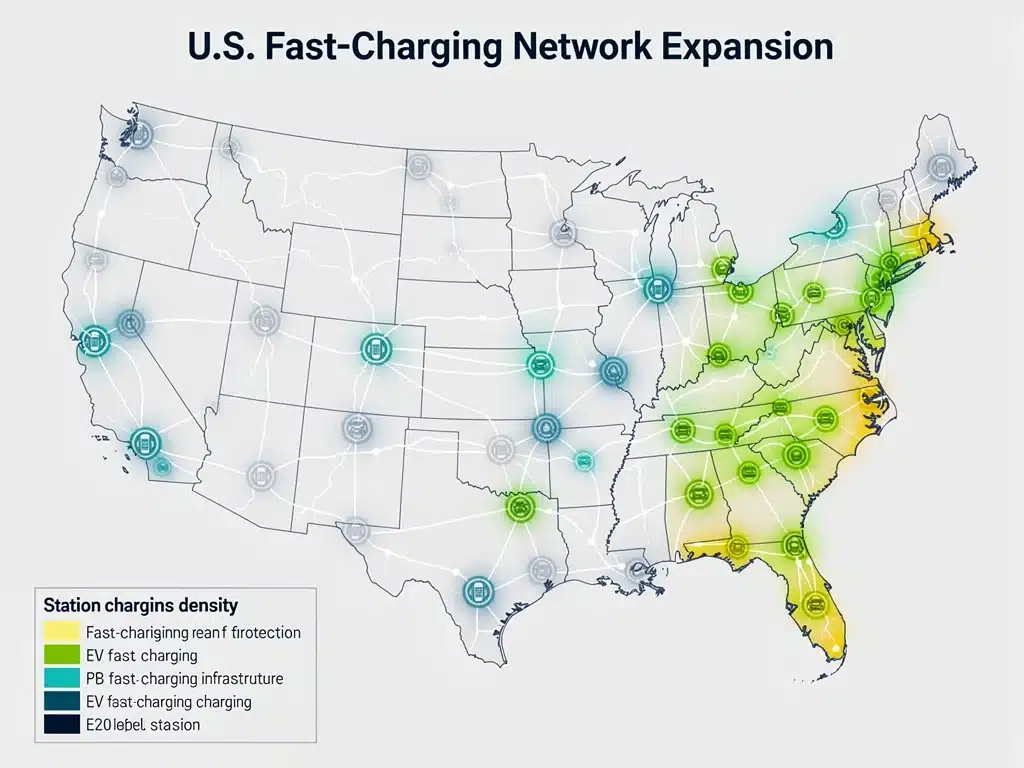
The strategic placement of these high-speed chargers along major highways and key travel routes will create a seamless network, allowing drivers to cover greater distances with minimal disruption. This is a game-changer for road trips and inter-city travel.
- Reduced anxiety for long-distance travel
- Improved planning for extended journeys
- More spontaneous travel options for EV drivers
By making EV travel as convenient as gasoline travel, the mandate plays a crucial role in accelerating the transition to electric vehicles across the nation.
Challenges and Criticisms of the New Standards
While the new national fast-charging standards are largely welcomed, they are not without challenges and criticisms. Concerns have been raised regarding the cost of upgrading existing infrastructure, the strain on the electrical grid, and the potential for a fragmented charging experience during the transition period.
Some critics argue that a blanket 15-minute mandate might not be optimal for all charging scenarios or vehicle types, suggesting a more flexible approach could better serve diverse needs. The rapid pace of technological change also poses a challenge, as standards must remain adaptable.
Ensuring equitable access to these advanced charging stations, particularly in rural and underserved communities, remains a significant hurdle. The goal is to avoid creating charging deserts where EV adoption could be stifled.
Ensuring Grid Stability and Power Delivery
The deployment of numerous ultra-fast charging stations, each drawing significant power, raises important questions about grid stability and local power infrastructure. Utilities must invest heavily in grid upgrades to support this increased demand.
Smart charging technologies and energy storage solutions will play a vital role in managing peak loads and ensuring that the electrical grid can reliably support the growing number of high-powered chargers. This requires careful planning and coordination.
- Significant utility investment in grid modernization
- Integration of smart charging and energy storage
- Preventing localized power outages due to demand spikes
Addressing these grid-related challenges is paramount to the long-term success and sustainability of the national fast-charging network under the new standards.
Manufacturer Responses and Vehicle Compatibility
Automakers are rapidly responding to the new national fast-charging standards, with many already designing new EV models to take full advantage of higher charging speeds. The 15-minute mandate is pushing manufacturers to innovate in battery technology and charging architecture.
Compatibility with the evolving charging network, including both CCS and NACS connectors, is a top priority for manufacturers. Many are offering adapters or integrating dual-port capabilities to ensure their vehicles can charge anywhere.
The drive for faster charging is also influencing vehicle software updates, optimizing charging curves to accept higher power levels more efficiently and safely. This ensures that the vehicle can maximize the benefits of the new high-speed stations.
Future of EV Battery Technology and Charging Speeds
The 15-minute mandate is a strong catalyst for advancements in EV battery technology. Researchers are exploring new battery chemistries and designs that can tolerate faster charging rates without compromising battery health or longevity.
Solid-state batteries and improved thermal management systems are key areas of innovation that could further reduce charging times beyond the current mandate. These advancements promise even quicker charge times in the coming years.
- Innovation in battery chemistry for faster charging
- Improved thermal management for battery health
- Potential for sub-15-minute charging in the future
The future of EV charging speeds is intrinsically linked to these ongoing developments in battery technology, with the 15-minute mandate serving as a foundational benchmark.
What the Future Holds: A Fully Integrated EV Charging Ecosystem
The implementation of the new national fast-charging standards and the 15-minute mandate represents a pivotal moment in the evolution of the EV ecosystem. The long-term vision is a fully integrated, highly reliable, and universally accessible charging network that supports widespread EV adoption.
This future ecosystem will see seamless communication between vehicles and chargers, predictive maintenance to ensure uptime, and dynamic pricing models to optimize grid usage. The user experience will be intuitive and stress-free.
Ultimately, the goal is to make owning and operating an electric vehicle as convenient, if not more so, than traditional gasoline-powered cars, paving the way for a cleaner and more sustainable transportation future.
Consumer Education and Awareness Campaigns
As the charging landscape evolves, consumer education and awareness campaigns will be critical to ensure EV owners understand the new national fast-charging standards. Clear communication about charger locations, compatibility, and optimal charging practices is essential.
Educational resources will help drivers maximize the benefits of the 15-minute mandate, providing guidance on how to find and use the fastest chargers efficiently. This proactive approach will build confidence and encourage broader adoption.
- Clear communication on new standards and benefits
- Guidance on charger location and usage
- Building consumer confidence in the EV ecosystem
Informing the public about these significant advancements is key to realizing the full potential of the new EV charging infrastructure.
| Key Point | Brief Description |
|---|---|
| 15-Minute Mandate | New federal rule for fast chargers: 150 miles in 15 minutes. |
| Connector Standards | Focus on CCS and NACS compatibility for widespread access. |
| Federal Funding | Billions allocated to build compliant, high-speed charging stations. |
| Grid Impact | Requires significant grid upgrades to support high-power demand. |
Frequently Asked Questions About EV Fast-Charging Standards
The 15-minute mandate requires new federally funded DC fast-charging stations to deliver at least 150 miles of range to a typical electric vehicle within approximately 15 minutes. This aims to standardize and significantly speed up the public charging experience for EV owners.
Your current EV will benefit from the expansion of faster, more reliable charging stations. While your vehicle’s maximum charging rate is fixed, you’ll find more stations capable of delivering high power, improving travel convenience. Compatibility with CCS and NACS will also be enhanced.
The 15-minute mandate primarily applies to new fast-charging stations built with federal funding. While existing stations are not required to upgrade, the new standards set a benchmark that may encourage private operators to modernize their infrastructure over time to remain competitive.
Key challenges include upgrading the electrical grid to handle higher power demands, ensuring equitable access to charging in all regions, and streamlining permitting processes. Also, maintaining interoperability between different EV models and charging connectors requires ongoing coordination.
These standards are expected to significantly boost EV adoption by reducing range anxiety and making electric vehicles more practical for long-distance travel. The improved reliability, speed, and standardization of charging will enhance the overall user experience, encouraging more consumers to switch to EVs.
Looking Ahead: The Evolution of EV Charging in the United States
The advent of new national fast-charging standards and the 15-minute mandate marks a transformative period for electric vehicle infrastructure in the United States. This federal initiative is more than just a regulatory change; it’s a foundational step towards a future where EV charging is fast, reliable, and universally accessible.
As these changes unfold, it will be crucial to monitor the pace of infrastructure deployment, the impact on grid stability, and ongoing innovations in battery and charging technology. The collaborative efforts between government, industry, and utilities will determine the ultimate success of this ambitious undertaking.
For EV owners and prospective buyers, the outlook is promising, with a clearer path to a seamless and efficient charging experience. The next few years will undoubtedly solidify the role of electric vehicles as a mainstream transportation solution, driven by these pivotal advancements in charging standards.